How to Clean a Pizza Stone Without Soap, Soaking, or Cracking It
You pulled the stone out and it's black, blotchy, and crusted with baked-on cheese, and your first thought is that you've wrecked it. Take a breath. You almost certainly haven't, and most of what looks like damage is normal.
The real harm comes from the fixes people grab in a panic: soap, a long soak, a scrub under hot water. This is how to clean a pizza stone the way it actually wants to be cleaned, without soap, without soaking, and without cracking it. Good pizza stone care is mostly about doing less, not more.
TL;DR: What's the Best Way to Clean a Pizza Stone?
The best way to clean a pizza stone is to cool it down, scrape it off dry, wipe lightly only if you have to, and let it air dry. No soap, no soaking, no cleaning it while it's hot.
- Let the pizza stone cool completely. Leave it in the turned-off oven for a few hours or overnight. A hot stone hit with cool air or water can crack from thermal shock, so the patience is the whole trick.
- Scrape off the loose food and crumbs. A bench scraper, a plastic pan scraper, a stiff nylon brush, or a dedicated stone brush all do the job. Steel wool and metal scourers gouge the soft surface, so leave those in the drawer.
- Dry-brush the surface clean. For most cleanups, that is the entire job. No soap, ever, because the porous stone drinks it in and your next pizza pays the price.
- Wipe with a barely damp cloth only if gunk is stuck on. A quick swipe, never a soak, and never submerge it. Trapped water turns to steam on reheat, and steam is how stones crack.
- Air dry the stone fully before it goes back in the oven or into storage. Bone dry is the goal. A stone packed away damp is the one that grows mold.

That covers maybe 95 percent of cleanups. Stubborn stains get a baking soda paste, burnt-on crust gets heat and then a scrape, and a black surface gets left alone, because that dark color is seasoning, not dirt.
If you remember nothing else about how to clean a pizza stone, it's this: water barely belongs in the routine. The stone sanitizes itself every time you preheat it, so you're scraping for looks and texture, not for hygiene.
What is the best way to clean a pizza stone?
The best way to clean a pizza stone is to do as little as possible and let heat carry the load. Everything that matters about how to clean a pizza stone fits into five steps.
Between the stones in our own wood-fired oven and the steels we test, we've cleaned baking surfaces hundreds of times, and the routine never gets more complicated than this.
1. Let the pizza stone cool completely
Walk away and let it drop to room temperature, ideally overnight in the off oven. Touching a 500°F stone with a wet rag or a cold counter is the fastest way to snap it, and there's no cleaning shortcut worth a cracked stone.
2. Scrape off loose food and crumbs
Once it's cool, drag a bench scraper or a plastic pan scraper across the surface to knock off the dried debris. A stiff nylon brush or a stone brush works too. Skip steel wool and metal scrapers, since they dig into the soft ceramic and leave grooves that trap more gunk later.
3. Brush it down dry, no soap
A dry brush handles the rest. Resist the reflex to reach for dish soap or any detergent. The stone is porous, so it pulls the soap deep into its pores, and you cannot rinse it back out.
4. Wipe with a barely damp cloth, never soak
If something is genuinely stuck, dampen a cloth, wring it nearly dry, and wipe the spot. Keep water to a few drops. Soaking or submerging the stone loads moisture into the pores, and that water flashes to steam the next time you heat it.
5. Air dry the pizza stone fully before storing
Let it sit out until it's completely dry, or pat it down with a dry towel and give it air. If you store it in a cabinet, make sure it's bone dry first.
The "oven resident" habit, and why so many of us never take the stone out
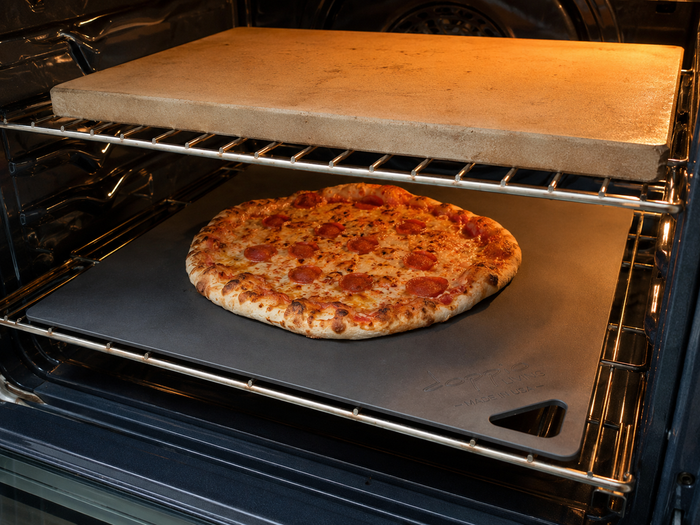
Here is the move most longtime stone owners land on: just leave the stone in the oven. It solves three headaches at once.
- No hauling or dropping. The stone is heavy and brittle, and the floor wins every time. Leave it on the bottom rack and you never risk the drop.
- It steadies your oven. The stone acts as a heat sink, holding warmth and smoothing out temperature swings even when you're roasting something unrelated.
- It stays bone dry. Sitting in the open oven, it never gets the trapped moisture that breeds mold.
When you're roasting something splattery, slide a sheet of heavy-duty foil over the stone to catch the drips, or let it migrate to the warming drawer for the day. Treated this way, the same stone can ride in there for 5 to 10 or more years without a real wash.
Can I clean my pizza stone with soap and water?
No, you should not wash a pizza stone with soap and water, and the surprising part is that the soap, not the water, does the lasting damage.
Cordierite, the low-expansion ceramic most quality stones are made from, is shot through with tiny pores. Those pores pull moisture out of your dough for a crisp crust, but they also drink up whatever you put on them.
Can you use Dawn on a pizza stone?
No, you can't use Dawn on a pizza stone to clean it. A squirt of Dawn or any dish soap soaks straight into the porous surface, and your next pizza comes out tasting like Dawn.
Plenty of people see soap bubbles still rising off the stone after several rinses, which tells you how deep the detergent went. Once it's in, you cannot fully wash it back out.
Why some manuals tell you to use soapy water (and why to ignore it on an unglazed stone)
This is where folks get confused. A few appliance manuals, the Breville Pizzaiolo among them, tell you to wipe the stone with warm soapy water, rinse, and dry.
That advice is written for a generic, uniform clean across the whole machine, and it's fine for a sealed or glazed surface. For a bare, unglazed cordierite stone, the no-soap rule wins, because there's no glaze stopping the detergent from settling into the pores.
How to fix a stone you already soaped
If the deed is done, you can usually walk it back.
- Rinse the stone repeatedly under warm water, then let it dry completely.
- Run a couple of "sacrificial" bakes with scrap dough to pull the residue out as the stone heats.
- Finish with a high-heat purge, the oven cranked to max for an hour, to drive off whatever is left.
Are pizza stones supposed to be washed?
Pizza stones aren't really supposed to be washed. A quick rinse is the most a stone ever needs, and most cleanups are waterless. Can you wash a pizza stone at all? A fast rinse under warm water is fine in a pinch. A scrub-down in a soapy sink is not.
Can you submerge a pizza stone in water?
No, you can't submerge a pizza stone in water. A submerged stone soaks up far more water than it can shed, and the trapped moisture turns to steam on the next reheat. That steam pressure builds inside the stone and cracks it.
Why pizza stones crack (and what thermal shock actually is)
Thermal shock is just a localized temperature swing that snaps the ceramic. One part of the stone expands or contracts faster than the part beside it, the bonds give out, and it fractures. The classic triggers all come from hard experience:
- Cold liquid or tomato sauce hitting a hot stone mid-bake.
- A cold stone going straight into a hot oven.
- A 500°F stone set down on a cold granite counter.
The failure is sudden and loud, the kind of bang that sounds like someone slamming a door. The good news: a cracked stone usually still bakes. Push the pieces together on the rack and keep going.
We get into how the two surfaces behave under heat in the steel-versus-stone breakdown.
Can I use vinegar to clean a pizza stone?
You can use vinegar to clean a pizza stone, but baking soda is the better tool, and vinegar usually trades one problem for another. A baking soda paste is the real workhorse for stubborn marks. Vinegar is debated for good reason.
Baking soda paste, the deep-clean that actually works
The baking soda pizza stone method is the deep clean people trust. The paste is mildly abrasive and slightly alkaline, so it lifts polymerized grease and acidic food residue without flavor-altering chemicals.
- Mix baking soda with a little water until it's a spreadable paste.
- Spread it over the stained spot and let it sit until it dries out.
- Brush or scrape off the dried paste, then wipe with a barely damp cloth and air dry.
It'll fade a stain and kill surface tackiness, but it rarely takes the color all the way back to new, and that's fine.
Where vinegar fits, and where it doesn't
Vinegar is acidic, so people hope it'll dissolve carbon and mineral marks. The catch is that the porous stone soaks up the vinegar smell, so you swap a grease note for a sour one, and the acid can etch the surface over time.
So clean pizza stone vinegar style only sparingly, on a truly stubborn stain, and lean on the baking soda first.
The "burn it off" high-heat method
For baked-in stains, let the oven do the chemistry. Run the stone at the oven's max temperature for an hour and the heat carbonizes a lot of residue into ash you can sweep off once it cools. Let it heat and cool slowly so you don't shock it.
The self-cleaning oven cycle, handle with real caution
This is the nuclear option, and we lean against it. A self-clean cycle hits roughly 900 to 1000°F and can leave a stone looking brand new, but it carries two genuine risks.
The first is the stone itself. Repeated cycles fatigue the ceramic and crack it eventually. One stone got self-cleaned about a dozen times before it finally split, so if you do it at all, do it rarely.
The second risk is your oven. That cycle is hard on the appliance's own circuitry and wiring and can shorten its life, especially with digital controls.
There's also a fire angle. As the federal safety record on pizza stones documents, an oiled stone taken to extreme heat can actually catch fire. A clean, dry, unoiled stone almost never needs the cycle in the first place.
How to remove burnt crust from pizza stone?
To remove burnt crust from a pizza stone, heat beats muscle every time: warm the stone so the crust loosens, then scrape. Trying to attack a cold, fused-on mess with a scrubber is how people gouge the surface.
We've pried burnt cheese off these surfaces dozens of times, and the gentle-heat-then-scrape order is the heart of how to clean a burnt pizza stone without wrecking it.
Heat the stone first, then scrape
Warm the stone in the oven so the burnt-on crust softens and releases its grip. Then drag a flap spatula or a bench scraper across it. The debris lifts in sheets instead of fighting you.

The "heat and turn" method for high-heat and outdoor ovens
If you cook in a wood-fired or other high-heat oven, you have the best cleaning tool there is: the flame. Rotate the soiled section of the stone toward the fire and let the intense heat burn the stuck-on food down to white ash. Brush the ash away once it cools. No water, no scrubbing, no chemicals.
When to reach for sandpaper
For rough or truly stubborn spots, fine or medium-grit sandpaper can smooth the surface back down. Go light, and again, never metal scourers, which leave grooves that just collect more gunk.
Why did my pizza stone turn black?
Your pizza stone turned black because it's doing exactly what it's built to do. The porous surface soaks up oil, sauce, and tiny bits of food, then bakes them dark over time. That dark layer is patina, not dirt, and it's a sign of a stone that gets used.
Embrace the stains, don't bleach it back to white
A pizza stone stained dark can look like a crime scene, and the instinct is to scrub it pale again. Don't. Trying to strip the color does more harm than the stain ever would.
Use the damp-paper-towel test instead: wipe a damp paper towel across the surface, and if the towel comes away clean, that discoloration is permanent patina you can't and shouldn't remove. You already cleaned the stone; what's left is just color.
 How do you make a pizza stone look new again?
You mostly can't make a pizza stone look new again, and chasing it will wreck the surface. If you're searching how to clean a black pizza stone back to its original beige, the honest answer is that the dark color is there to stay.
A realistic refresh is a baking soda paste on the worst spots and a good dry scrape to even out the texture. The color stays dark, and that's the correct outcome, not a failure.
Stain versus mold, how to tell and how to fix it
A black mark is patina. A musty smell is something else. If a stone was stored damp, it can grow mold, and the giveaway is the odor: a dirty-dish-towel funk that hits when the stone heats up.
The first time we found mold on a stone we'd put away damp, that smell told us instantly what had happened. A moldy pizza stone is usually fixable with heat, applied carefully.
- Put the stone in the oven before you turn it on so it heats slowly and doesn't shock.
- Run the oven hot, roughly 450 to 550°F, to sanitize the surface. The USDA's guidance on mold notes mold is destroyed by high temperatures, and a pizza bake runs far past that.
- If the smell still won't clear after a hot run or two, replace the stone. Some funk just won't leave.
This is also why soap is never needed for hygiene. A preheated stone blows past the USDA's bacteria danger zone of 40 to 140°F by hundreds of degrees, so every bake is a sterilizing cycle.
Are you supposed to oil a pizza stone?
No, you're not supposed to oil a pizza stone, at least not for almost anyone, and the reason is chemistry, not opinion. Oiling a stone is the single most common mistake new owners make, usually because they're treating it like cast iron. It isn't.
Why oiling a stone backfires
Cast iron is dense metal. When you heat oil on it, the iron acts as a catalyst and the oil polymerizes, meaning it links into a hard, slick coating that bonds to the surface.
That's real seasoning, and there's a clear breakdown of the chemistry in this explainer on how polymerization works.
A stone has no metal catalyst and it's porous, so none of that happens. Capillary action pulls the oil deep into the stone instead of bonding it on top.
Then on a hot bake, that trapped oil blows past its smoke point, billows acrid smoke, trips the smoke alarm, and becomes a genuine fire risk. So if you're wondering how to season a pizza stone, the surprising answer is that you mostly don't.
A stone seasons itself slowly through normal use, as fats from your dough and toppings work in over months. The rare exception, a thin coat of high-smoke-point oil for very sticky doughs, is a minority view, and we'd skip it.
Can you spray olive oil or use Pam on a pizza stone?
No, you shouldn't spray olive oil or use Pam on a pizza stone. A spray like Pam or a coat of olive oil just soaks in, smokes on the next bake, and clogs the pores. Avoid heavy sprays on the stone entirely.
What to do when you first get a pizza stone
Knowing how to use a pizza stone for the first time saves a lot of grief. Don't oil it. Don't wash it. Just wipe it with a dry cloth, set it on the rack, and let it season through cooking.
For the first several bakes, building your pizza on parchment is a fair break-in crutch while the surface develops. If you want the broader walkthrough, our notes on getting started with a new surface carry over to a stone.
Stop pizza from sticking, the number one beginner failure
Sticking is almost always a heat-and-friction problem, not a stone problem.
- Preheat fully. A cold stone is why dough welds itself to the surface. Give it a real 45 to 60 minutes.
- Use ball bearings. Scatter cornmeal, coarse semolina, or grits on the peel so the pizza slides. Skip fine flour, which burns bitter at high heat.
- Lean on parchment. Build on parchment and either bake on it or yank it halfway once the crust sets.
- Watch for hidden condensation. Rest the stone about 15 minutes past the end of preheat so any surface moisture burns off first.
If your crust keeps coming out pale or soft on the bottom, that's a different fix. Our guide to why a crust turns out soggy walks through it.
Why a Pizza Steel Is the Lower-Maintenance Alternative to a Stone
Every hard rule above traces back to two facts about a stone: it's porous, and it's brittle ceramic. Porosity is why soap, oil, water, and odors ruin it. Brittleness is why thermal shock cracks it. Take away those two traits and almost every problem on this page disappears.
That's the case for a carbon steel. It's non-porous, so soap residue and trapped water are simply not a thing. The only rule is to dry it and wipe a little oil on so it doesn't rust.
It's metal, so it takes a real polymerized seasoning that gets more nonstick with use, the cast-iron effect a stone can only fake. And it won't shatter from thermal shock, cold sauce, or a drop on the kitchen floor.
The test cooks at America's Test Kitchen say they slightly prefer a steel for that reason, and note a steel can cook a pizza up to about 30 percent faster. That means a darker, crispier undercarriage out of a standard 500°F home oven. Cleanup is the whole pitch: scrape, rinse, dry, done.
We hear the same story constantly from people who switched, often after cracking their third or fourth stone.
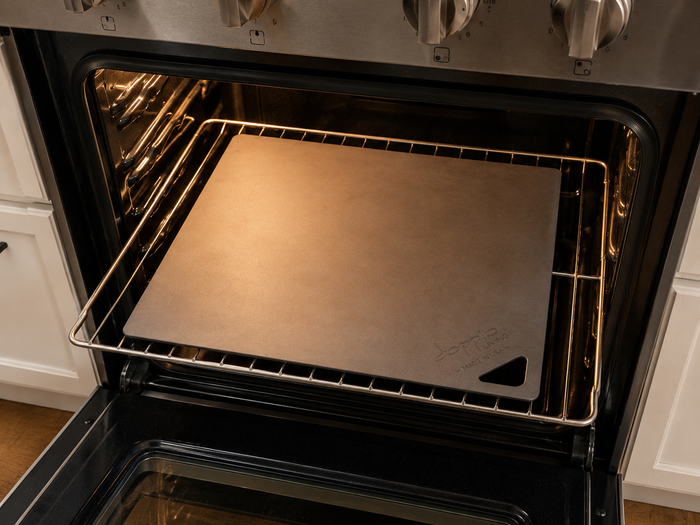
 If that's you, our 16" x 14.25" carbon steel pizza steel is built for it: A36 carbon steel, pre-seasoned with organic flaxseed oil, Made in USA, $99.97 on Amazon.
None of this means a stone is bad. We sell the wood-fired oven that runs on one, and a well-kept stone bakes beautifully for years. A steel just takes the fragility and the fussy cleaning out of the picture.
For the full side-by-side, here's how steel and stone compare, and caring for a pizza steel is even simpler than caring for a stone.