Best Thickness for Pizza Steel for Every Type of Home Cook
Written by the Doppio Living team, home baking enthusiasts who've been firing up pizza in our own wood-fired oven for over 10 years. We've tested steels of every thickness, burnt more than our fair share of bottoms, and nailed the science behind what actually works in a real kitchen.
Most of us have been through the cycle. Cookie sheet, then a cheap pizza stone, then a cracked pizza stone, and finally start asking: should I get a pizza steel? And if so, how thick does it need to be?
The best thickness for a pizza steel depends on your oven, how many pizzas you make at a time, and whether you want something practical or built for maximum heat. We've broken it all down with real data, real weight numbers, and honest trade-offs.
TL;DR (What Is the Best Thickness for Pizza Steel?)
- 1/4 inch thick is the best pizza steel thickness for most home ovens.
- Why thickness matters: It controls how much heat your steel stores and how fast it recovers between pizzas. Steel conducts heat 18x faster than stone.
- 3/16" vs 1/4" vs 3/8" vs 1/2": The biggest jump is from 1/4" to 3/8". After 3/8", the jump in performance isn't worth the extra weight and preheat time. For most people, 1/4" is the sweet spot.
- Match your steel to your oven: No broiler? Stick to 1/4" max. Broiler with 550°F? Go 3/8".
- Preheat is everything: 1/4" needs a full 60 min. The number one mistake is not preheating long enough.
- Weight trade-offs: 1/4" is 14 to 16 lbs (manageable). 3/8" hits 22 to 24 lbs. 1/2" is 30 to 35 lbs and some people regret it.
- For bread: 1/4" is ideal. Thicker steels burn bread bottoms because bread bakes 25 to 45 minutes, not 5.
- Our pick: 1/4" for most home bakers. Handles pizza, bread, and back-to-back baking without being too heavy or slow to preheat.
Why Pizza Steel Thickness Matters More Than You Think
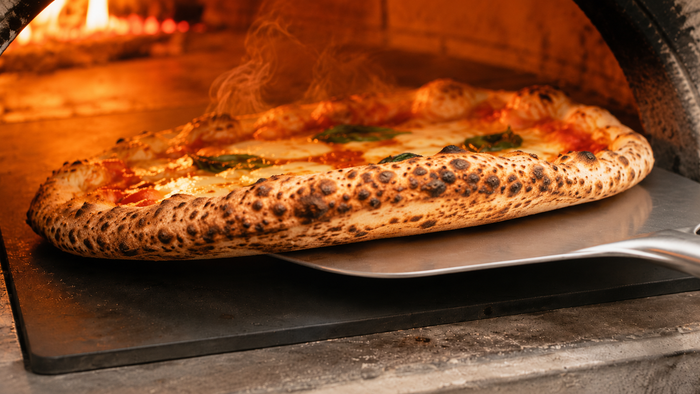
The thickness of the pizza steel matters because it controls how much heat it stores, how fast it bounces back between pizzas, and whether your crust gets that beautiful charred leopard spotting or just sits there looking flat.
Steel conducts heat roughly 18 times faster than a ceramic pizza stone. When your cold dough hits that surface, it gets an instant blast of energy. A thinner steel gives up its heat quickly and takes a while to recover. A thicker one holds a bigger reserve and keeps pumping energy into your crust, pizza after pizza.
Think of your pizza steel like a thermal battery. The thicker the steel, the bigger the battery. More stored heat, less temperature drop when cold dough lands on it, faster recovery between bakes.
The trade-off? Thicker steels take longer to preheat, weigh more, and cost more.
Best Pizza Steel Thickness: 3/16" vs 1/4" vs 3/8" vs 1/2" Compared
Here's how the four standard pizza steel thicknesses stack up for a typical 14" × 16" steel:
| Thickness | Weight | Preheat Time | Bake Time | Back-to-Back Pizzas | Best For |
|---|---|---|---|---|---|
| 3/16" (5mm) | 10 to 13 lbs | 45 min | 5 to 8 min | 1 to 2 | Casual weeknight pizza |
| 1/4" (6mm) (Best Thickness for Pizza Steel) | 14 to 16 lbs | 45 to 60 min | 5 to 7 min | 2 to 3 | Most home bakers |
| 3/8" (10mm) | 22 to 24 lbs | 60 to 75 min | 3 to 5 min | 3 to 5 | Pizza parties, enthusiasts |
| 1/2" (13mm) | 30 to 35 lbs | 75 to 90 min | 2 to 4 min | 5 to 8 | Max performance, serious hobbyists |
The biggest performance jump happens going from 1/4 inch to 3/8 inch. Going from 3/8 to 1/2 is not as big of a jump, and going beyond 1/2 inch is even less noticeable. In other words, 3/8" is the inflection point. There are diminishing returns after that.
Is 3/16 pizza steel good enough?
A 3/16 inch pizza steel is the thinnest option you'll find. It preheats in about 45 minutes, costs less, and weighs only 10 to 13 pounds. For one pizza on a weeknight with a good oven and broiler, it gets the job done.
But it falls short for back-to-back baking. The second pizza usually comes out less crispy, with a paler bottom. Testing from a German pizza steel manufacturer confirmed that a 6mm steel (close to 3/16") was not sufficient if several pizzas need to be baked in a row.
For context, 3/16" is the same as 7 gauge steel. And yes, 1/4 inch is thicker than 3/16 inch (0.25" vs. 0.1875"). That's a question that comes up more often than you'd think.
The 1/4 inch thick pizza steel, the most popular baking steel thickness
This is where most people land, and for good reason. A 1/4 inch pizza steel has more than enough thermal mass for single pizzas, handles 2 to 3 pies per session, weighs a manageable 14 to 16 lbs, and preheats in 45 to 60 minutes.
With proper preheating, most people have zero complaints about a 1/4" steel. It's also the best thickness if you bake bread, since thicker steels can burn bread bottoms during long bakes.
Quick tip: When making multiple pizzas on a 1/4" steel, wait about 7 to 10 minutes between pies to let the steel regain its heat. That's the perfect amount of time to slice up and eat the first pizza at the table.
3/8 inch thick pizza steel, the performance sweet spot
If you host pizza parties or you're chasing charred, blistered, Neapolitan-style results at home, 3/8" is the thickness people upgrade to. At around 22 to 24 pounds, it's heavy but manageable. One experienced home baker put it simply: his 3/8 inch steel weighs close to 23 pounds, and that's as heavy as he would want it.
The real advantage is back-to-back baking. A 3/8" steel handles 3 to 5 consecutive pizzas without a significant quality drop, and you only need 3 to 5 minutes between pies instead of 7 to 10. Independent testing found a 3/8 inch steel reached 686°F under the broiler, baking near-perfect Neapolitan-style pizzas in just three minutes.
European manufacturers have confirmed this too: 8mm thickness (roughly 3/8") delivers the best weight-performance-price ratio for almost all applications.
When a 1/2 inch thick baking steel makes sense
Half-inch steels weigh 30 to 35 pounds and take 75 to 90 minutes to preheat. The performance is great for baking 5 to 8 pizzas back to back, but one reviewer who owns a 1/2" steel admitted he should have gotten a thinner one because at 30 pounds, it's quite unwieldy getting in and out of the oven.

If your oven only goes to 450°F without a broiler, skip the 1/2" entirely. The bottom will cook way faster than the top can keep up with, giving you a burnt bottom and pale toppings. Unless you're baking for a crowd every weekend, most people don't need a half-inch steel.
How to Match Baking Steel Thickness to Your Oven
The best thickness for your pizza steel depends heavily on what kind of oven you've got. The wrong thickness in the wrong oven gives you burnt bottom and raw toppings, which is just as frustrating as having no steel at all.
| Your Oven Type | Max Temp | Broiler? | Best Pizza Steel Thickness |
|---|---|---|---|
| Basic apartment oven | 450 to 500°F | No | 3/16" or 1/4" |
| Standard home oven | 500°F | Yes | 1/4" |
| Good home oven | 550°F | Yes | 1/4" to 3/8" |
| High-end home oven | 550°F+ | Yes | 3/8" |
| Convection oven | 500 to 550°F | Yes | 3/16" to 1/4" |
| Gas grill / kamado | 400 to 600°F | Lid = dome | 1/4" to 3/8" |
| Wood-fired oven | 700 to 900°F | N/A | 1/4" |
If your oven has a broiler, your thickness options open up
The broiler is the single most important factor in choosing your pizza steel thickness. Without a broiler, you're limited to 1/4 inch or thinner. With one, you can safely go up to 3/8" or even 1/2" because the broiler provides the top heat needed to match the steel's bottom heat output.
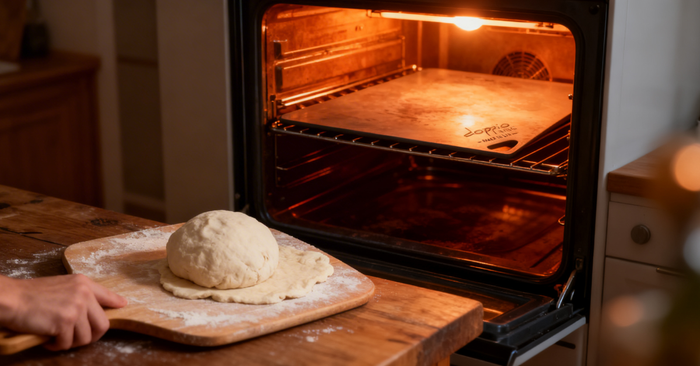
The broiler method: preheat at max temp for a full hour with the steel on the upper-middle rack. Launch your pizza, bake for a few minutes, then turn on the broiler for the final 1 to 2 minutes.
Once you switch the broiler on, check every 15 to 20 seconds. It will go from exactly how you love it to burnt in a heartbeat.
If you have a convection oven, you can go thinner
Convection fans circulate hot air faster, so the top of your pizza cooks more quickly. That reduces the need for a thick steel. A 3/16" to 1/4" steel works great in most convection ovens. Convection plus a 1/4" steel performs roughly the same as a conventional oven with a 3/8" steel.
How Long to Preheat a Pizza Steel (and the Number One Mistake)
Not preheating long enough is the number one reason people are disappointed with their pizza steel, regardless of thickness.
| Pizza Steel Thickness | Minimum Preheat | Recommended Preheat |
|---|---|---|
| 3/16" | 30 min | 45 min |
| 1/4" | 45 min | 60 min |
| 3/8" | 60 min | 75 min |
| 1/2" | 75 min | 90 min |
Here's the mistake: people preheat for 20 to 30 minutes, the oven beeps to say it's ready, and they figure the steel must be hot too. It's not. Testing data shows that at 30 minutes, the surface averages only about 420°F even when the oven is set to 500°F+. That's too low for proper crust development.
With proper preheating, there doesn't seem to be any negative reviews of 1/4" steels for pizza making. Most "my steel doesn't work" complaints trace back to not preheating long enough, not to having too thin a steel.
Pro tip: Get an infrared thermometer ($15 to $20) and check the actual surface temperature before your first pizza. Start at the back corner and make a Z pattern to the front corner. You want at least 500°F before that first pie goes on.
Is a Thick Pizza Steel Worth the Extra Weight?
As one home cook put it: pizza steels go from heavy to really heavy to really really heavy depending on the size and thickness you choose.
| Thickness | Approximate Weight | Handling Reality |
|---|---|---|
| 3/16" | 10 to 13 lbs | Easy, anyone can manage |
| 1/4" | 14 to 16 lbs | Manageable, like a cast iron skillet |
| 3/8" | 22 to 24 lbs | Heavy, doable but you'll feel it |
| 1/2" | 30 to 35 lbs | Very heavy, some people leave it in the oven permanently |
The weight jump from 1/4" to 3/8" is about 50%. Going from 1/4" to 1/2" more than doubles the weight. Some people who go 3/8" end up saying the weight just isn't worth the extra little bit of crisp crust over 1/4". It comes down to how often you bake and whether you move the steel in and out of the oven.
For oven rack safety: a 1/4" steel poses almost no risk. Some 1/2" steel owners have reported their oven rack sagging after six weeks of a heavy steel sitting permanently on the rack. If you go thick, use a peel to launch pizzas instead of sliding the rack in and out.
Before you buy: Make a cardboard template out of an old pizza box and slip it into your oven. Make sure it fits with about 1 inch of clearance on each side. You don't want to buy an anchor that doesn't fit.
Best Baking Steel Thickness for Bread
If you bake bread as well as pizza, thickness matters in a completely different way. For bread, thinner is actually better.
Pizza bakes in 3 to 8 minutes. Bread bakes in 25 to 45 minutes. A thick steel that's perfect for pizza's short, intense bake can burn and scorch the bottom of bread loaves because the bread sits on it for so long.

If you're baking sourdough, baguettes, or any kind of artisan bread, 1/4" is the baking steel thickness you want. It gives you excellent oven spring without scorching the bottom crust. Home bakers consistently report better oven spring and better baked loaves after switching to a steel.
The 1/4" steel does double duty. One steel lives in your oven and handles everything: homemade pizzas, sourdough loaves, baguettes, even focaccia. If you do have a thicker steel and want to bake bread, place a sheet of aluminum foil between the steel and your parchment to slow down heat transfer.
Our Pick: The Best Pizza Steel Thickness for Most Home Bakers
After years of baking on steels of different types of pizza steel thicknesses, we keep coming back to the same answer: 1/4 inch is the best pizza steel thickness for most home bakers.
It handles 2 to 3 pizzas per session. It weighs 14 to 16 pounds. It preheats in about an hour. It works for bread too. And it won't sag your oven rack or require a forklift to move around.
If you regularly host pizza parties with 4+ pizzas per session and have a high-heat oven with a broiler, a 3/8" steel is the logical upgrade. But for the weeknight pizza maker and the Sunday bread baker, 1/4 inch is the move.

Doppio Living Chef-Grade Pizza Steel
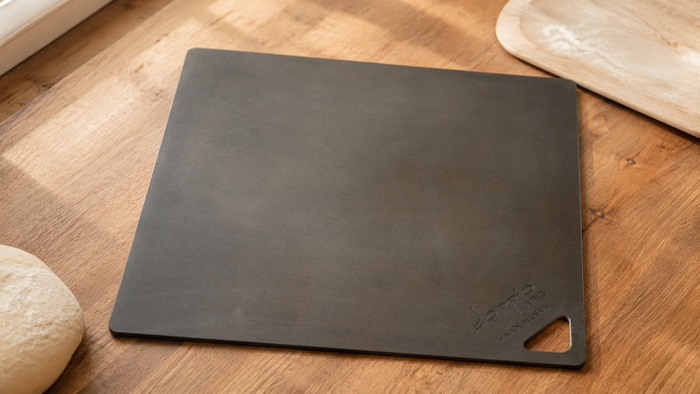
16" × 14.25" × 1/4" · A36 Carbon Steel · Pre-Seasoned with Organic Flaxseed Oil Made in the USA · 3-Year Warranty · Free Shipping
Ready to use out of the box. Works in your oven, on the gas grill, or on a charcoal grill. Built to last a lifetime, and priced so you don't have to overthink it.
This guide is based on our own testing over 10+ years of baking, combined with published data from pizza steel manufacturers, independent testing, and the collective experience of the home baking community. We sell a 1/4" pizza steel because we genuinely believe it's the right thickness for most home bakers, but we've done our best to give you the full picture so you can make the call that's right for your setup.