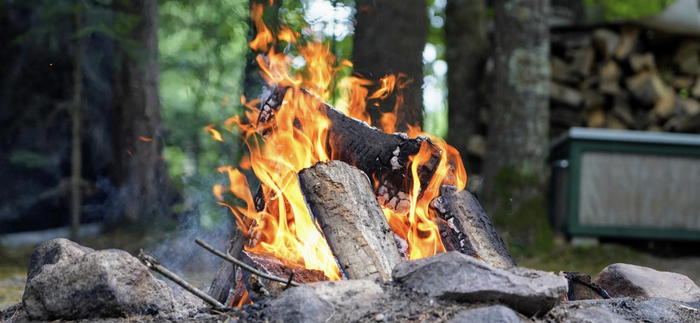
Should You Buy Portable Fire Pits for Camping? Why and Why Not To Buy
You've seen them at REI or at your local Target, scrolled past them online, heard friends rave about them. But you're thinking: "Is this actually going to be worth carrying to my campsite? Or am I just going to regret spending the money?"
That's the exact question we're answering in this blog. And honestly? The answer depends on your specific camping situation.
We've been camping for years—from remote camping on public land to family trips at established campgrounds, van setups, and backcountry time. We've spent the past couple seasons camping with different fire pit options across multiple situations, and here's what we've learned through actually using them.
TL;DR Are Portable Fire Pits Worth It?
- For van lifers and people camping on remote land: Absolutely yes. It’s a nice one-and-done setup for campers who want a contained fire—especially where rules are tighter.
- For traditional campground camping: Maybe. Depends on what your local campground allows and whether you value the convenience.
- For ultralight backpacking: No. The weight doesn't justify what you get when a camping stove does the job more efficiently.
The truth is that "worth it" isn't a simple yes or no. It's about matching the fire pit to your actual camping style and what you actually need.
What Campers Are Really Asking About Portable Fire Pits
We've figured out the core concerns that determine whether someone should actually invest in a portable fire pit:
- Is this thing actually portable enough to fit in my vehicle?
- Can I actually cook and use this effectively?
- Will this cost me a fortune? Is it going to break or warp on me?
- Will I use it enough to justify the investment?
- What's my environmental impact?
- How does this compare to other options?
-
What am I not reading in the reviews?
Let's address each one.
Concern #1: "Is This Actually Portable?"
When we were helping friends set up vans and heading out on remote camping trips, we learned pretty quick that the word "portable" gets used loosely in marketing. What actually matters is whether it fits in your vehicle and whether you'll actually want to pack it trip after trip.
The weight reality:
|
Category |
Weight |
Best For |
Reality |
|---|---|---|---|
|
Ultralight |
255g-470g |
Backpacking only |
Works, but barely functional for realistic camping |
|
Car Camping |
4-12 lbs |
Van lifers, remote camping, regular trips |
Actually portable in vehicles |
|
Premium |
20-34 lbs |
Stationary base camps |
Semi-permanent installation |
A 12-pound portable fire pit (like our Doppio Living Campfire) isn't ultralight. But in a vehicle context, it's genuinely portable. You pack it once. You use it multiple times across a season. The weight-to-functionality ratio just works.

The real question isn't "Is 12 pounds light?" It's: "Does this fit my vehicle, and will I genuinely use it?" For van lifers and people we know who camp regularly? Yes on both counts.
Concern #2: "Can I Actually Cook and Use This Effectively?"
We need to be straight with you here because what people expect versus what actually works can be pretty different.
Out camping with different fire pit setups—solo trips, family outings, small groups on public land—we figured out exactly what works and what doesn't.
What portable fire pits handle well:
- Quick sausages or hot dogs for two people
- Boiling water for coffee or tea
- S'mores with the family
- Sitting around a warm fire
- Simple meals for 2-3 people
What they struggle with:
- Cooking breakfast, lunch, and dinner all day
- Feeding a big group of eight or more people
- Cast iron cooking (you need sustained coals)
- Extended cooking when you need consistent heat
Here's the honest take: if you're thinking "I'll replace my camp stove with this," you're setting yourself up for disappointment. If you're thinking "This is a nice addition to my camping setup," you're onto it.
What actually works? Use them together. On our camping trips, we use a camping stove for efficient meal prep. The fire pit handles everything else. Each tool does what it's actually good at.
Concern #3: "Will This Cost Me a Fortune?"
One of the biggest mistakes we've seen people make is buying the cheapest portable fire pit they can find. Turns out, cheap models fail. Thin stainless steel warps within a season or two. Poor hinges corrode. Here's the reality check: you get what you pay for.
The most durable portable fire pits cost more:
|
Budget ($30-70) |
Mid-Range ($100-200) |
Premium ($200-500+) |
|---|---|---|
|
Thin stainless steel |
Quality cold-rolled steel |
Heavy corten steel (weathering) |
|
Warps in year 1-2 |
5-10 year lifespan |
10+ years typical |
|
High regret rate |
Solid performers |
Professional-grade durability |
|
Often replaced |
Long-term value |
Lifetime investment |
Choosing what’s best for your money is simple:
-
Thicker steel (0.075" or more) = maintains shape under sustained heat
-
Thin stainless steel = bows and warps under extended fires
-
Quality hinges = continue working across seasons
-
Cheap hinges = corrode in outdoor conditions
Our Doppio Living Campfire uses weathering steel (corten) that's 0.075" thick. We chose it specifically because it handles high heat without deforming. Made in the USA from materials selected for durability in real outdoor conditions.
Here’s what you’re actually spending your money on:
-
Buy three cheap fire pits @ $50 each = $150 + frustration + waste
-
Buy one quality fire pit @ $150-200 = Reliable performance for a decade
When you invest in a quality fire pit, you're not replacing it in two years. You're using it for a decade.
Concern #4: "Will I Actually Use It?"
This is the honest conversation most people skip.
Portability and space genuinely do affect how often you'll use something. If it takes up significant space, you're less likely to pack it for camping trips.

The critical question isn't whether you think you'll use it. It's whether your actual camping life will support it.
High-likelihood users (where this becomes essential gear):
- Van lifers: Compact living means this solves a real problem. You use it regularly.
- Remote camping folks: When you're out on public land with no established fire rings, a portable pit is your only option.
- People in burn-ban regions: Seasonal fire restrictions mean this isn't optional—you need it.
-
Leave No Trace enthusiasts: Environmental values drive the choice. You can camp responsibly without scarring ground.
Maybe users (where it depends):
- Campgrounds: If fires are already easy where you camp, this might be nice—but not necessary.
- A few trips a year: If you only get out 2–3 times a year, you might not reach for it enough to justify the space.
Low-likelihood users (where it's usually regret):
- Ultralight backpackers: A small stove usually makes more sense than carrying a fire pit.
- Once-a-year campers: These often end up living in the garage between trips.
- Urban folks without regular trips: Aspirational gear that becomes clutter.
Be honest about which category describes you. Don't buy based on what you wish you did. Buy based on what you actually do.
Concern #5: "What's My Environmental Impact?"
This is where portable fire pits genuinely shine—and it's often overlooked.
The off-ground design solves multiple environmental issues at once:
The big win with an off-the-ground fire pit is that you’re not cooking the campsite itself. You finish your night and, in most cases, the ground underneath looks basically the same as when you arrived. It also helps protect grass and soil, keeps the fire more contained (fewer stray embers), and makes ash cleanup a lot easier.
Another bonus: some campgrounds that won’t allow a fire on the ground will still allow a raised, portable pit—so it can be the difference between “no fire tonight” and “yep, we’re good.”
In some regions, this has become the requirement—ground fires banned entirely, portable pits allowed.
When we were out camping on public land, portable fire pits made it possible to camp responsibly in pristine areas. This wasn't just convenience—it was the only way to have a fire while leaving zero trace.
Concern #6: "How Does This Compare to Other Options?"
Portable fire pits don’t exist in a vacuum—there are a couple solid alternatives, and the “best” one depends on where you camp and what you care about most.
Wood-burning portable fire pit vs propane fire pit
Wood-burning portable fire pit (ex: Doppio Living Campfire)
A wood-burning pit is for campers who want the real campfire vibe—the crackle, the glow, and the feeling of actually sitting around a fire. It’s also the better pick if you like simple campfire cooking, because once you’ve got coals, you can do a lot with them.
Where it can get tricky is smoke and rules. Windy nights can blow smoke right into camp, and some regions tighten restrictions on wood fires depending on season and conditions.
Propane fire pit
A propane pit is the “easy button.” No smoke, no ash, and you can shut it off instantly when you’re done. In a lot of places with fire bans, propane is also more likely to stay allowed.
The tradeoff is the fuel setup. You’ve got to bring a tank, deal with refills, and it usually costs more per night. And while it’s warm and convenient, it doesn’t feel quite as “campfire” as burning wood.
The simple way to choose
- If you want the classic campfire experience (and you’re allowed to burn wood): go wood-burning.
- If you want the cleanest, least-fussy fire option (especially in fire-restricted areas): go propane.

Portable fire pit vs traditional campfire
Traditional open campfire
A classic campfire is hard to beat when you want big heat and that “everyone scoots closer” kind of night. If you’re allowed to gather wood (or you’ve bought it locally), it’s usually the cheapest way to get a long, warm fire going.
The downside is the impact and the rules. Ground fires can leave scars, especially on grass or soft soil, and they’re the first thing to get restricted when conditions are dry. Smoke can also be a dealbreaker depending on wind and campsite spacing.
Portable off-ground fire pit
An off-ground pit is the more controlled, lower-impact option. It’s especially helpful when you’re camping somewhere without a fire ring, or in places where the rules allow raised pits but don’t allow fires directly on the ground.
You do give up some heat and “bonfire” size, and it takes a bit more setup (plus cooldown time before packing). Cooking is usually better for simple meals than it is for all-day campfire-style cooking.
Quick way to choose
- If you want max heat and the site allows it: traditional campfire.
- If you want a cleaner setup or you’re camping where ground fires are restricted: portable off-ground pit.
Portable fire pit vs camping stove
Camping stove (isobutane canister)
A stove is the no-drama choice for food. It’s light, fast, and predictable—especially when you’re trying to get a meal done and move on with your day.
But it’s not a “sit around it” thing. You don’t get warmth, you don’t get that campfire feel, and it doesn’t turn into a gathering spot after dinner.
Portable fire pit
A portable fire pit is the opposite: it’s for the experience. You get warmth, light, and a place for people to hang out. You can cook on it, but it’s best for simple stuff—not your main cooking plan for the whole trip.
It’s also heavier and takes more time (setup, feeding the fire, cooling down, packing up).
What works best in real life
For most campers, the best setup is both: use the stove for cooking, and use the fire pit for the part of camping that a stove can’t replace—relaxing around an actual fire.
Concern #7: "What's the Hidden Reality I'm Not Reading?"
After using other portable fire pit brands on real trips, a few surprises popped up.
They don’t cool down fast. Fire pits take way longer to cool than you'd think. Stainless steel holds heat for 45-90 minutes. Heavy steel can take 90+ minutes to cool completely. This affects your camping schedule. You can't pack immediately after your fire ends. Budget for a 90-minute gap between finishing and breaking camp.
Instructions are often thin, and the specs can be fuzzy—especially on weight limits and fuel. Check the max load before you pile on wood, run through assembly once at home, and stick to the fuels the manufacturer recommends.
Set it up the way you want before you light it. Once there’s a fire going, you’ll want gloves on hand—moving grates or tweaking the setup with bare hands isn’t happening. Also, heat can make parts shift a bit, so start on level ground and get everything where you want it before you strike a match.
Storage needs more than the bag. The canvas bag is nice for transport. For long-term storage, you'll want additional plastic protection to keep things clean and dry.
Real Camping Scenarios: Where Portable Fire Pits Actually Solve Problems
Let's move beyond theory to actual camping situations.
Van Life and Compact Living (Highest Value)
The scenario: You're setting up a van. Space is your constraint. Every square inch matters.
A portable fire pit integrates beautifully into van life. It's compact when folded. You deploy it at camp. You use it regularly because you're camping regularly. Over a season, this becomes one of your most-used pieces of gear.
Why use portable fire pits when you're into van life and compact living: Folds down small, fits the van easily, and ends up getting used on most trips.

Remote Camping (Solves a Real Problem)
The scenario: You're out camping on public land where there are no established fire rings.
You arrive at a remote spot with no fire infrastructure. A portable fire pit lets you camp responsibly without scarring the ground. It's not optional—it's the only way to have a fire while leaving zero trace.
Why use portable fire pits when you're remote camping: Lets you have a fire out in beautiful, untouched spots without leaving a burn scar behind.
Burn Ban Regions (Makes Fires Legal)
The scenario: Your region has seasonal fire restrictions. Ground fires are prohibited.
A portable fire pit might be your only legal option for a fire. Many CSA-approved portable pits are allowed even when ground fires are banned. This isn't convenience—it's necessity.
Why use portable fire pits when you're camping in burn ban regions: It’s a simple workaround in areas where ground fires are a no-go
For the “Leave It Better Than You Found It” Campers
The scenario: You care about leaving your campsite looking the same (or better) than when you arrived.
A portable fire pit enables Leave No Trace principles. Off-ground = no scarring. Contained = safer. No wood sourcing = forest impact reduction. Everything aligns with responsible camping.
Why Use Portable Fire Pits: If Leave No Trace matters to you, this matches that mindset from setup to cleanup.
Family Camping (Supplementary Role)
The scenario: You're camping with kids. You have a camp stove and a fire pit.
The stove handles meals. The fire pit handles s'mores, warmth, and the experience of sitting around a fire. The combination works beautifully. Each tool serves its purpose. Neither replaces the other.
Why use portable fire pits when you're camping with your family: For family trips, the stove handles dinner and the fire pit handles the fun—s’mores, warmth, and hanging out.
What We Recommend: The Doppio Living Campfire
Since you're asking, here's what we use and why:
12.2 lbs of weathering steel. Not ultralight, but genuinely portable in vehicles. Heavy enough to stay rigid under heat and last for a decade.
Made in the USA. Manufactured from materials specifically selected for durability. No surprise failures from cheap imports.
Flat-pack design. It's genuinely compact when folded. Fits perfectly in the included waxed canvas bag. Easy vehicle storage.
Multi-use. It's a fire pit, grill, and cooking surface. Removable grid, adjustable grate heights.
Off-ground protection. Zero ground scarring. Meets regulatory requirements in most camping areas.
Designed for actual camping. Not based on marketing—based on what actually works when you're out there.
Not an ultralight budget buy—more of a “buy it once and use it for years” fire pit for van lifers and remote campers.
So, is a portable fire pit worth it for you?
Here’s how to know if a portable fire pit is worth if for your camping needs:
Yes, a portable fire pit is worth it for you if…
- You camp often (think: most months, or 4+ trips a year).
- You camp where fire rules are stricter, or you’re out on remote/public land.
- You care about leaving the ground the way you found it.
- You want an off-the-ground fire instead of a scorched patch of dirt.
- You’d rather buy one solid pit once than replace a cheap one later.
- You’ve got room in the car/van to pack it without it becoming annoying.
Maybe a portable fire pit is worth it for you if…
- You only get out a few times a year (around 2–3 trips).
- Your usual campgrounds already have fire rings and allow them.
- Space is “okay,” but not unlimited.
- You mainly want convenience, not a must-have piece of gear.
No, a portable fire pit is not worth it for you if…
- You camp once a year (or less).
- You’re backpacking and every pound matters.
- Your main goal is cooking fast and easy (a stove wins).
- You like the idea of camping more than you actually go.
- You don’t really have a good place to store it between trips.
Still Not Sure If It's Worth It? Reach Out To Us!
We've talked about this from every angle, but your camping situation is unique. The right portable fire pit depends on your specific needs, how often you camp, where you camp, and what matters most to you.
If you've read this far and you're thinking "yes, this actually does solve my problem," then you've found your answer. Invest in quality, and it'll serve you well for years.
If you're thinking "hmm, actually I'm not sure," that's what we're here for. We'll help you decide whether a Doppio Living Campfire is the right fit for your setup. We can help you think through.
The goal isn't to sell you something you don't need. The goal is to help you find the right gear for your actual camping life.