Pizza Steel for Frozen Pizza Gives You Better Crust in Less Time
Written by the Doppio Living team, home baking enthusiasts who've been firing up pizza in our own wood-fired oven for over 10 years.
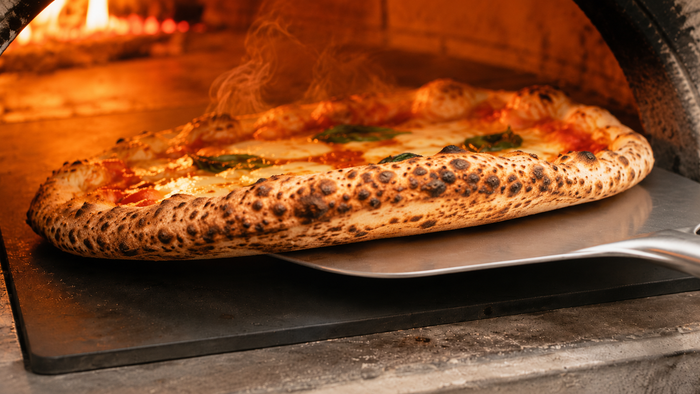
You followed the box instructions. The cheese looks right. Then you slide a spatula under the pizza and the whole bottom folds over like a wet napkin. That soggy, floppy crust is the number one complaint with frozen pizza, and a pizza steel for frozen pizza fixes it. The steel delivers so much direct heat to the bottom that the crust starts crisping within seconds of contact. Better crust, faster cook time, almost zero extra effort.
TL;DR (How To Cook Frozen Pizza in a Pizza Steel)
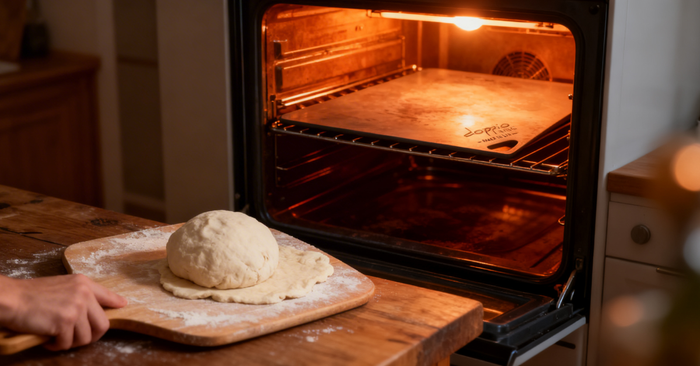
- Place your pizza steel on the middle oven rack and preheat at 425°F for a full 45 minutes before you cook anything.
- Keep the frozen pizza in the freezer until the steel is fully preheated. Do not let it sit on the counter and thaw.
- Set your oven 25°F lower than whatever the box says. If the box says 450°F, go with 425°F.
- Pull the frozen pizza out of the freezer, remove all packaging and any cardboard rounds, and place it on a sheet of parchment paper.
- Slide the pizza (on the parchment) directly onto the hot steel using a pizza peel, cutting board, or rimless baking sheet.
- After 2 to 3 minutes, once the bottom crust has set, pull the parchment paper out from under the pizza so the dough sits directly on the steel.
- Bake for 10 to 12 minutes total for standard crust, 8 to 10 for thin crust. Watch it closely. The frozen pizza steel time is shorter than what the box says, and the window between perfect and burnt is tight.
- Check the bottom at the 8 minute mark. You're looking for golden brown, not black.
- Pull the pizza off the steel with a peel or spatula and rest it on a wire rack for 2 minutes before slicing. Putting it flat on a cutting board traps steam and kills the crispy bottom you just worked for.
- If you're cooking a second pizza, give the steel 5 to 10 minutes to recover its heat before launching another one.
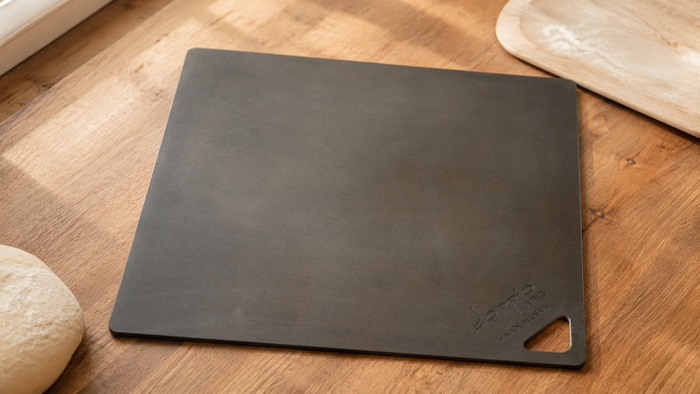
A pre-seasoned steel like the Doppio Living Chef-Grade Pizza Steel (16" x 14.25", $99.97 on Amazon, Made in USA) is ready to go right out of the box. No seasoning required before your first frozen pizza.
Cook Time for Frozen Pizza on a Pizza Steel
The cook time for frozen pizza on a pizza steel runs about 30 to 40% shorter than what the box tells you. Where a standard frozen pizza takes 15 to 18 minutes on a baking sheet, the same pizza finishes in 10 to 12 minutes on a preheated steel. Thin crust varieties can be done in 8 to 10 minutes.
That speed comes from how carbon steel handles heat. Steel conducts heat roughly 15 to 18 times faster than a ceramic pizza stone, and it stores about twice the thermal energy per volume. When a frozen pizza hits a fully preheated steel, the surface barely drops in temperature. All that stored energy transfers straight into the crust, evaporating moisture and starting the browning process almost instantly.
On a thin aluminum baking sheet, the opposite happens. The sheet cools down the moment the frozen pizza touches it. The crust sits in its own moisture, and you end up waiting 18 minutes for a bottom that's still pale and soft.

Frozen Pizza Steel Time at 400, 425, and 450
The exact frozen pizza steel time depends on your crust type and oven temperature. Here's a rough guide based on a fully preheated 1/4" steel:
- Thin crust at 400°F: 8 to 10 minutes. Check at 8. These go fast.
- Standard crust at 425°F: 10 to 12 minutes. That's the range that works for pretty much every standard frozen pizza out there.
- Rising crust at 375°F: 15 to 18 minutes. Yes, lower temp. More on that in the temperature section below.
If you're using a baking steel, frozen pizza cooks faster across the board because steel doesn't lose its heat when cold food hits it. A baking sheet gives up almost all its stored energy on contact.
Preheating a Pizza Steel for Frozen Pizza
You have to preheat for frozen pizza. No exceptions. A cold or lukewarm steel is actually worse than a plain oven rack because the cold metal pulls heat away from the crust instead of delivering it.
Think of it like charging a battery. A half-charged steel gives you a half-charged pizza. Your oven will beep "preheated" after about 10 to 15 minutes, but the steel itself is still absorbing heat at that point. At the 30 minute mark, a 1/4" steel might only be at 380°F even if the oven air is at 500°F. You need the full 45 minutes for the steel to reach proper temperature throughout.
If you don't have 45 minutes, even 25 to 30 minutes of preheat makes a noticeable difference over a baking sheet. But the full preheat is where the real magic happens.
Here's the workaround that experienced steel owners use: just leave the steel in the oven all the time. It stabilizes your oven temperature for everything you cook, and it's always partially preheated whenever you turn the oven on. One experienced home baker put it simply: they keep theirs on the bottom rack permanently and it's always ready to go.
What Happens When You Don't Defrost Before Cooking
What happens if you don't defrost a frozen pizza before cooking it on steel? Honestly, better results than if you do. Cooking frozen pizza on pizza steel straight from the freezer is the recommended method, and there's a real food science reason behind it.
Why Cooking From Frozen Works on Steel
When ice crystals in frozen dough melt, they break down the cell structure and release moisture. If you thaw a frozen pizza on the counter first, that moisture soaks into the dough before it ever hits the oven. The crust gets soggy before the bake even starts.
Cooking from frozen skips that problem entirely. The rigid, frozen disc slides cleanly onto the hot steel, and the intense conductive heat handles the thawing, moisture evaporation, and browning in rapid sequence. The crust goes from frozen to crispy without ever passing through a soggy middle stage.
Manufacturers design their products to be cooked from frozen. They do extensive testing on cooking cycles at specific temperatures, and their instructions assume the pizza goes in solid. Food safety is another reason. Thawing at room temperature puts the dough in the danger zone between 40°F and 140°F, which is where bacteria multiply fastest.
The Case for Thawing
Some experienced pizza cooks actually prefer to thaw in the fridge overnight. They find that a defrosted rising crust gets slightly better oven spring and a more even bake. One test by a food publication found that a defrosted DiGiorno had a crust that rose a bit higher with a better overall consistency.
If you want to try thawing, do it in the refrigerator, not on the counter. And know that a thawed pizza is harder to handle during the launch. The dough gets floppy and tears more easily when you're trying to slide it onto a 500°F steel.
For most people cooking frozen pizza on a baking steel, cooking straight from frozen is the move.
Putting a Frozen Pizza on a Pizza Steel
Getting a frozen pizza onto a pizza steel is easier than launching raw dough, but you still need a plan. The steel is extremely hot, the pizza is rigid and awkward, and if you fumble the transfer, you'll have cheese and toppings smoking on the steel surface.
The Parchment Paper Method
Parchment paper is the solution the community has standardized around, and it works perfectly every time.

Pull the frozen pizza from the freezer. Remove all packaging, plastic wrap, and any cardboard disc on the bottom. Place the frozen pizza on a sheet of parchment paper. Use a pizza peel, a rimless baking sheet, or even a sturdy cutting board to slide the whole assembly (parchment and pizza together) onto the hot steel.
Leave the parchment in place for the first 2 to 3 minutes. The frozen pizza keeps the paper cool enough that it won't burn during this initial phase. Once the bottom crust sets and releases from the parchment, open the oven, grab the corner of the paper, and pull it out. Now the crust sits directly on the hot steel for the final crisping phase.
Skip the cornmeal and flour. At 425°F and above, loose flour and cornmeal burn and smoke. They'll set off your smoke alarm and leave a bitter taste on the crust. Parchment is cleaner, easier, and doesn't affect the flavor at all.
If your frozen pizza has a cardboard round on the bottom, always remove it. Cardboard blocks heat transfer, traps moisture underneath the crust, and can actually ignite at around 427°F. That's right in the range of common pizza baking temperatures.
Keeping Frozen Pizza From Sticking to the Steel
Frozen pizza sticking to a pizza steel is usually a seasoning issue, not a temperature issue. A well-seasoned steel has a natural layer of polymerized oil that prevents sticking. If you're using a pre-seasoned steel, frozen pizza on pizza steel shouldn't stick at all, especially with parchment for the first few minutes.
If you do get some residue or "gunk" on the steel after a bake, scrape it off with a metal spatula while the steel is still warm. Don't let it build up between uses. We put together a pizza steel care guide from all our experience in using pizza steels that walks through all of it if you want the details.
Important: Keep the pizza frozen until the exact moment you're ready to launch. If you let it sit on the counter while the oven preheats, the bottom starts thawing and releasing moisture. That moisture hits the hot steel and acts like glue before the crust can set. Frozen is your friend here.
Greasing a Pizza Steel for Frozen Pizza
You do not need to grease a pizza steel for frozen pizza. A properly seasoned steel already has a non-stick surface built up from layers of polymerized oil, similar to cast iron. Adding extra oil or butter before a bake doesn't help and can actually create smoke at high temperatures.
When Greasing Goes Wrong
If you spray oil or brush butter directly on a 425°F steel, it hits the smoke point almost immediately. You'll get a kitchen full of haze and a smoke alarm going off before the pizza even touches the surface.
The parchment paper method handles any sticking concerns. Between the seasoning on the steel and the parchment barrier for the first few minutes, grease is completely unnecessary.
If your steel isn't well-seasoned yet (maybe it came unseasoned or you've scrubbed the seasoning off), the fix isn't greasing before each use. The fix is building a proper seasoning layer. Our guide on using a pizza steel for the first time walks through the whole seasoning process.
Best Temperature for Frozen Pizza on Steel
The best temperature for frozen pizza on steel is not what the box says. Steel transfers heat so efficiently that running your oven at box temperature almost guarantees a burnt bottom before the toppings are done.

Why You Drop the Temp 25°F From Box Instructions
Here's what's happening. Carbon steel conducts heat roughly 15 times faster than a ceramic stone and hundreds of times faster than oven air. The steel delivers intense, direct conductive heat to the bottom of the crust. Meanwhile, the toppings only get heated by ambient oven air, which works through convection and radiation. Those are much slower processes.
With frozen pizza, this gap gets even wider. The toppings start frozen solid. They need extra time to thaw, heat through, and melt. The crust is in direct contact with a searing hot steel and starts browning within the first minute.
If you don't lower the temperature, the bottom chars while the cheese on top is still cold and barely melted. This is the number one complaint from people who try frozen pizza on a baking steel for the first time and don't adjust.
The practical fix: drop your oven temperature about 25°F below whatever the box recommends. If the box says 425°F, set your oven to 400°F. The steel more than makes up the difference with direct heat transfer, and the lower ambient temperature gives the toppings time to catch up.
375 vs 400 vs 425 for Different Crust Types
Not every frozen pizza plays the same way on steel. Thin crusts love it. Thick crusts need adjustments. Here's the breakdown:
- Thin and cracker crusts (Tombstone, Red Baron, Newman's Own): These are the best frozen pizza for steel, period. Set the oven to 400°F (box temp minus 25°F). Check at 8 minutes. You'll get a shatteringly crispy bottom without burning.
- Standard crust: 425°F works well. Expect 10 to 12 minutes. This is the sweet spot where does steel help frozen pizza the most, because you get a golden, crunchy bottom that you'd never achieve on a baking sheet.
- Rising crust and self-rising (DiGiorno Rising Crust): Drop all the way to 375°F. Thick dough needs more time for the interior to cook through, and the steel's intense bottom heat will burn the underside long before a thick crust bakes all the way. If the bottom is charring before the center is done, your temp is too high.
- Stuffed crust: Same as rising crust. Set it to 375°F, slide the steel to a lower rack, and check it every few minutes.
- Pan-style and Detroit-style (Motor City Pizza Co.): These come in their own tray. Place the tray on the steel instead of putting the pizza directly on the surface. The steel supercharges the heat through the bottom of the tray, and you'll get deeply caramelized edges from the cheese and grease crisping against the pan.
- Cauliflower crust (Caulipower, CPK): Treat like thin crust. 400°F, check early. These are delicate and benefit hugely from the quick crisp that steel provides.
If your pizza came out perfect on the bottom but the cheese barely melted, try the broiler trick. Switch to broil for the last 60 to 90 seconds to blast the top with direct radiant heat. Watch it like a hawk. The line between bubbly and blackened is about 30 seconds.
What Actually Changes When You Use Steel
So does steel help frozen pizza enough to matter? The short answer is yes, and it's not even close. The difference shows up in the first bite.

Steel vs Baking Sheet vs Pizza Stone vs Oven Rack
The bottom crust is the entire game with frozen pizza, and every cooking surface handles it differently.
Baking sheet: 15 to 18 minutes at box temperature. The thin aluminum cools instantly when the frozen pizza lands on it. The crust sits in its own moisture while the sheet slowly reheats. Result: pale, soft, often soggy bottom. This is the method most people use and most people complain about.
Oven rack (direct): 15 to 20 minutes. Better than a baking sheet because hot air circulates under the pizza. You'll get decent crispness, but it's uneven, and there's always the risk of cheese dripping onto the heating element and smoking up your kitchen.
Pizza stone: 12 to 15 minutes. Real improvement over a baking sheet. The stone absorbs moisture and delivers steady heat. But here's the catch. Dropping a frozen pizza onto a 500°F stone can crack it. Thermal shock from the extreme temperature difference is the leading cause of pizza stone failure, and pizza stones are not cheap to keep replacing.
Pizza steel: 10 to 12 minutes at 425°F. The crust starts browning within the first minute. The bottom comes out golden, crispy, and structurally sound. You can pick up a slice and it holds straight out without flopping. Steel never cracks from thermal shock, and a good one lasts a lifetime.
The Doppio Living Chef-Grade Pizza Steel measures 16" x 14.25", which fits a standard 12" frozen pizza with room to spare on all sides. That extra surface area means you don't have to nail a perfect center launch every time. The pizza can land slightly off-center and still cook evenly. It's pre-seasoned with organic flaxseed oil and arrives ready to use, so your first frozen pizza can go on the steel the same day it shows up.
Why the Bottom Crust Is the Whole Game
Frozen pizza fails from the bottom up. The toppings almost always turn out fine because oven air heats them from all directions. The crust is the weak link because it only gets heat from whatever it's sitting on.
When that surface is a thin baking sheet, the crust never gets hot enough to drive off moisture before the sugars can caramelize. You need the crust surface to hit roughly 280°F before the browning reaction (the Maillard reaction) even starts. Below that, the crust just steams in its own water.
Steel solves this by getting past that 280°F threshold almost immediately. The intense conductive heat flash-evaporates the moisture at the contact point and starts browning the crust within seconds. One home cook who tried it for the first time said their frozen pizza came out with actual char marks on the bottom, something they'd never seen from a home oven before.
If you eat frozen pizza once a week, a steel pays for itself in crust quality within a month. You'll stop being disappointed by soggy bottoms and start actually looking forward to frozen pizza night. If you already own a pizza steel for homemade pizza, you should absolutely be using it for frozen too. It might honestly be the easiest thing you'll ever cook on it.
A Pizza Steel for Frozen Pizza Is the Easiest Upgrade You'll Make
Frozen pizza is never going to be artisan. Nobody's pretending a $5 box of DiGiorno is the same as a Neapolitan from a wood-fired oven. But it doesn't have to be soggy, floppy, or disappointing either.
A pizza steel closes the gap between what frozen pizza is and what it could be. Crispy bottom, faster cook time, and a crust that actually crunches when you bite into it. The whole process is simple: preheat the steel, drop the temp 25°F, slide the pizza on with parchment, and pull it in 10 to 12 minutes.
If you're looking for a steel that handles frozen pizza (and everything else), the Doppio Living Chef-Grade Pizza Steel is $99.97 on Amazon, pre-seasoned and Made in USA. It arrives ready to use. No seasoning, no prep, no waiting. Just preheat and go. For more on what else you can do with a steel beyond pizza, check out our first-time use guide for the full rundown.