Pizza Steel Preheat Time: Exact Minutes for a Perfect Crust
Written by the Doppio Living team, home baking enthusiasts who've been firing up pizza in our own wood-fired oven for over 10 years.
You preheated your pizza steel for 20 minutes, launched your dough, and pulled out a pizza with a pale, floppy bottom. Sound familiar? The oven beeped. The air was hot. But the steel wasn't ready, and your crust paid the price. Learning how to use a pizza steel starts with getting the preheat right. Here's the exact pizza steel preheat time, temperature, and rack position you need.
TL;DR: How Long to Preheat a Pizza Steel
You need to preheat a pizza steel for 45 to 60 minutes at your oven's maximum temperature. 45 is the minimum, 60 is what we recommend. Here's how to do it right:
- Place the steel on the second rack from the top, about 6 to 8 inches below the broiler element. This gives you the best balance of bottom heat from the steel and top heat from the oven.
- Set your oven to its maximum temperature. For gas ovens, that's usually 500 to 550F. For electric ovens, set it to 450F (not higher, or the broiler won't activate later when you need it).
- Preheat for a full 60 minutes after the oven says it's ready. The oven air gets hot in 15 minutes, but your 1/4 inch steel needs the full hour to absorb enough heat. 45 minutes is the absolute minimum. Anything less and you're risking a soggy bottom.
- Check the surface with an infrared thermometer if you have one. You want 500F or higher on the steel surface before you launch your dough. Scan in a Z pattern across the surface to check for cold spots.
- Optional: switch to broil for the last 5 minutes of preheat. This pushes the steel surface well past 500F and gets you closer to what a commercial pizza oven can do. Some people swear by this step, others skip it. Try it both ways.
- Launch your pizza and cook for 3 to 8 minutes depending on your pizza style and oven setup. Neapolitan with broiler runs 2 to 4 minutes. NY style without broiler runs 6 to 8.
- Between pizzas, close the oven door and wait 5 to 10 minutes for the steel to recover its heat before launching the next one. After 3 or 4 pizzas, give it a full 10 to 15 minute reheat.
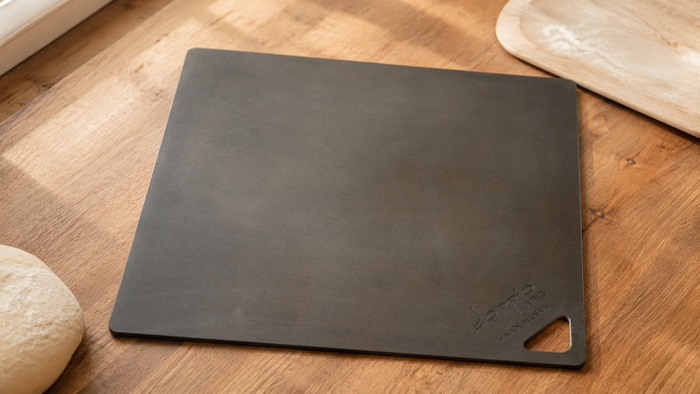
A 1/4 inch steel like the Doppio Living Chef-Grade Pizza Steel ($99.97 on Amazon, pre-seasoned and ready to use out of the box) hits the sweet spot for most home cooks. It preheats in 45 to 60 minutes, weighs about 18 pounds, and holds enough heat for 2 to 3 pizzas before needing a recovery break.
How Long to Preheat a Pizza Steel
How long to preheat a pizza steel depends on thickness, but for the standard 1/4 inch steel that most home cooks use, plan on 45 to 60 minutes at your oven's maximum temperature. The experts at Serious Eats, America's Test Kitchen, Baking Steel, and King Arthur Baking all recommend a full hour, and so do we at Doppio Living. Baking Steel frames 45 minutes as the minimum and 60 as ideal.
Why 45 to 60 Minutes
Your oven's preheat beep is basically meaningless when there's a steel inside. The air in the oven hits 500F in about 15 minutes, but the steel is a dense slab of carbon steel that takes much longer to absorb all that energy. Think of it like charging a battery.
At 30 minutes, the steel might only be at 380 to 420F on the surface, even though the air around it is 500F. At 45 minutes, you're closer to 470 to 500F. At 60 minutes, the steel is within about 20F of the oven air temperature, and the heat is fully soaked through from the surface to the core.
That full saturation matters because when you drop cold, wet dough onto the steel, it immediately sucks heat out of the surface. If the steel isn't fully loaded with energy, it can't cook the bottom fast enough. The dough's moisture cools the metal faster than the metal can cook the dough. That's how you end up with a limp, blonde undercarriage.
Yes, running your oven at max for a full hour uses real energy, and in the summer it will heat up your kitchen. People complain about this, and honestly, it's a fair point. But there's no shortcut that actually works. The 60 minute preheat is the cost of admission for great home pizza on steel.
Why 20 or 30 Minutes Isn't Enough
Is 20 minutes enough to preheat a pizza steel? Not even close. At 20 minutes, the surface of the steel is barely warm compared to the air around it. People who test with infrared thermometers consistently find the steel is 50 to 75F cooler than the oven air after just 30 minutes.
At the 30 minute mark, results are wildly inconsistent. Some testers measured 380F, others measured over 500F, depending on the oven type, steel thickness, and whether convection was running.
The bottom line: 30 minutes is a gamble. You might get lucky, but you'll probably get a soft, pale bottom. People who've switched from a 30 minute preheat to a full 60 minutes say it's the single biggest improvement they've made to their home pizza. Most baking steel instructions tell you 45 to 60 minutes for a reason.
Should Pizza Be at 375 or 400
Pizza on a steel should not be at 375 or 400 if you're making traditional pizza. For standard pizza styles like NY, Neapolitan, or thin crust, you want 500F or higher. At temperatures below 500F, the dough dries out before it browns. You end up with a tough, cracker-like crust instead of one that's crisp on the outside and tender inside.
The Case for 500 to 550F
The science is straightforward. The Maillard reaction, the chemical process that creates browning and flavor, starts around 280F but really ramps up between 284 and 330F. A steel surface at 500F triggers that reaction within seconds of contact with the dough, producing deep browning in 4 to 6 minutes instead of the 8 to 12 minutes it would take at lower temperatures.
Shorter bake time means the interior stays moist and tender. That's the whole point of using a steel in the first place. It conducts heat about 15 to 20 times faster than a pizza stone, which is why you get results closer to a real pizza oven.
If you're still deciding between the two, our pizza steel vs stone comparison breaks down the full difference.
There are exceptions. Frozen pizza actually does better at 425F on a steel (about 25 degrees below the box instructions). Sourdough bread benefits from a 475 to 500F preheat that drops to 450F after loading. But for fresh pizza dough, crank it as high as your oven will go.
The Broiler Method

The broiler is how you push your steel past the limits of your oven's bake setting. There are a few ways people use it, and this is one of the most debated topics in home pizza making.
Broiler preheat (most recommended): Preheat on bake for 45 to 55 minutes, then switch to broil for the last 5 to 10 minutes before you launch. This pushes the steel surface to 600F or higher. The radiant heat from the broiler element transfers energy directly into the steel, independent of the oven air temperature. This is the method Baking Steel recommends in their updated 2026 guide.
Broiler finish: Preheat on bake only, launch your pizza, and switch to broil in the last 1 to 3 minutes to brown the top. This is safer for beginners because you avoid burning the cheese before the bottom is set.
Hybrid: Preheat with broiler to supercharge the steel, switch to bake when you launch, then flip back to broil for the last 60 to 90 seconds. This takes practice and close attention, but people who've dialed it in say it produces the best leopard spotting on the crust.
Those dark, bubbly micro-blisters on the cornicione are what separates great home pizza from decent home pizza, and the hybrid method is how most people get there without a wood-fired oven.
Critical tip for electric oven owners: Set your oven to 450F, not 500F, during the bake phase. Most modern electric ovens have a safety sensor that blocks the broiler from activating if the cavity is already too hot. If you preheat at 500F, the broiler might not turn on when you switch to it. Gas ovens don't have this issue.
If your bottom is browning faster than your cheese is melting, try the foil tent trick. Fold a loose piece of aluminum foil over the top of the pizza for the last 1 to 2 minutes of the bake. It shields the toppings from direct heat while the steel finishes developing the bottom crust. It's a simple fix for ovens where the balance between bottom and top heat is hard to dial in.
Does Pizza Steel Go on Top or Bottom
A pizza steel goes on the second rack from the top in most ovens, about 6 to 8 inches below the broiler element. The folks at Baking Steel and King Arthur Baking both recommend this position, and so do most experienced home pizza makers.

Why Second Rack From Top
The top of the oven is the hottest zone because heat rises. Putting the steel up high means it sits in the warmest air during preheat and stays close to the broiler element when you need it.
But the very top rack is usually too close. People who put the steel right against the ceiling find the top of the pizza burns before the bottom is done. The second rack gives you enough clearance for the pizza to rise and for you to maneuver a peel.
When to Use a Different Position
The right position depends on what you're making and what kind of oven you have.
- NY style without broiler: Middle rack works fine. The steel handles the bottom, and the ambient oven heat handles the top over a longer 6 to 8 minute bake.
- Bread baking: Second rack from the bottom. The steel's aggressive heat transfer can scorch bread bottoms if it's too high.
- Gas oven with bottom broiler drawer: Everything flips. You'll need to put the steel in the bottom compartment and work in a tighter space. Some people limit their dough to 8 inches and hand stretch to fit.
If your bottoms are burning before the cheese melts, move the steel down a rack. If the bottom is pale but the top looks done, move the steel up. Every oven is a little different, so expect to experiment with your first few pizzas. Check out our first-time pizza steel guide for more setup tips.
One detail most guides skip: leave at least 1 inch of clearance between the edges of the steel and the oven walls. If the steel is too wide for your oven and sits wall to wall, it blocks airflow and heats unevenly. You need that gap for hot air to circulate around and under the steel properly.
Does Pizza Steel Get Hotter Than the Oven
Yes, a pizza steel can get hotter than the oven's set temperature, but only when using the broiler. Without the broiler, the steel generally reaches or stays slightly below the oven air temperature, typically within 20F of the set point.
How This Works
When the broiler is on, it blasts intense radiant heat (infrared radiation) directly from an element that runs at 1,000 to 1,500F. That energy transfers straight into the steel surface, bypassing the oven air entirely.
This is why people report steel surface temperatures of 600, 680, and even 750F in ovens that are technically set to 500 or 550F. It's the same principle that lets the sun warm your car dashboard way above the outside air temperature.
This is also why rack position matters so much. The closer the steel is to the broiler element, the more radiant energy it absorbs. Put the steel 2 inches from the broiler and you'll get scorching hot surfaces fast, but you'll also burn your pizza toppings before the bottom is done.
Using an Infrared Thermometer to Check

An infrared thermometer is the single best tool you can buy alongside a pizza steel. They cost about $20 and take the guesswork out of preheating entirely. Point it at the steel surface before you launch and you'll know exactly where you stand.
Here's what the numbers look like for a 1/4 inch steel at 500F:
- 30 minutes: 380 to 450F (wide range, too unreliable)
- 45 minutes: 470 to 500F (acceptable, close to ready)
- 60 minutes: 480 to 500F (full saturation, launch with confidence)
- 60 minutes plus 5 minutes of broiler: 550F and up
One important catch: Most infrared thermometers are calibrated for ceramic or stone surfaces (emissivity around 0.9). Bare or lightly seasoned steel has a much lower emissivity (around 0.3 to 0.5), which means the thermometer might read artificially low.
If your gun has an emissivity setting, adjust it to 0.3 to 0.5 for steel. If it's heavily seasoned and blackened, the default setting should be close enough.
How Thickness Affects Preheat Time
The thickness of your pizza steel directly determines how long you need to preheat. Thicker steels hold more heat, but they also take significantly longer to reach temperature. Here's how it breaks down.

1/4 Inch Steel
A 1/4 inch steel is what most home cooks use, and it's the best balance of performance, preheat time, and weight. At about 18 pounds for a 16 by 14 inch plate, it's manageable to move around and preheats in 45 to 60 minutes. If this is your baking steel first use, this is the thickness to start with.
For making one or two pizzas at a time, the crust quality from a 1/4 inch steel is essentially the same as from a thicker one. The steel holds more than enough thermal energy to give you a fast, aggressive sear on the bottom of your dough.
The Doppio Living Chef-Grade Pizza Steel is a 1/4 inch, A36 carbon steel at $99.97 on Amazon. It comes pre-seasoned with organic flaxseed oil, so you can put it straight in the oven and start your 60 minute preheat right out of the box.
3/8 and 1/2 Inch Steel
A 3/8 inch steel needs about 60 to 70 minutes to fully preheat. A 1/2 inch steel can take 75 to 90 minutes, sometimes longer. They weigh 23 to 30 pounds or more, and people have reported that half-inch steels can actually warp standard oven racks over time.
Where thicker steels shine is when you're doing pizza night for a crowd and cranking out 4 or more pies back to back. The extra thermal mass means the steel doesn't cool down as much between pizzas. But for most people making 1 to 3 pizzas for their family, a 1/4 inch steel does the job and saves you 15 to 30 minutes of preheat time and a lot of energy costs.
How Long Does Pizza Take on Pizza Steel
Pizza takes 3 to 8 minutes on a properly preheated pizza steel, depending on the style you're making and whether you're using the broiler. That's roughly 30% faster than cooking on a pizza stone, according to America's Test Kitchen testing.
Cook Times by Pizza Style
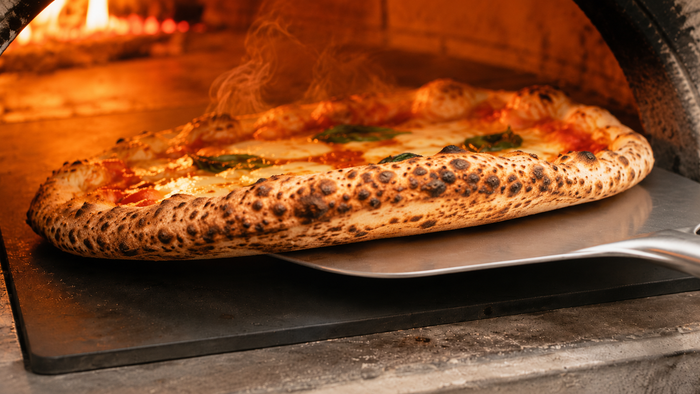
- Neapolitan with broiler: 2 to 4 minutes. The combination of a ripping hot steel below and the broiler blasting from above cooks the pizza fast, with good leopard charring on the crust.
- NY style (bake only, no broiler): 6 to 8 minutes. The steel handles the bottom, and the ambient oven air slowly cooks the top.
- Thin or cracker crust: 4 to 5 minutes at 500F.
- Frozen pizza: 10 to 12 minutes at 425F. That's about 30 to 40% faster than using a regular baking sheet.
One thing to keep in mind: you're not going to get a 90 second bake in a home oven. That requires the 800 to 900F environment of a wood-fired dome oven, and no home oven gets close to that. But 3 to 4 minutes with the broiler method is still a dramatic improvement over the 12 to 15 minutes most people are used to on a baking sheet or stone.
Back-to-Back Pizzas
When you pull a finished pizza off the steel, the surface temperature drops about 12F from the thermal shock of the cold dough. The steel recovers that heat in about 2 to 3 minutes, which is much faster than a pizza stone (which drops about 22F and takes 3 to 5 minutes to recover).
But here's the rule of thumb: close the oven door immediately after pulling the pizza, keep the temperature at max, and wait a full 5 to 10 minutes before launching the next one. After 3 to 4 pizzas in a row, give the steel a 10 to 15 minute breather to fully recharge. If you have an infrared thermometer, check that the surface is back to 500F before committing your next dough.
If your second or third pizza comes out with a pale, soft bottom while the first one was perfect, the steel didn't have enough recovery time. That's not a flaw with the steel. It's just physics. Be patient and the results stay consistent.
If you're regularly making 4 or more pizzas in a session, there's a trick from America's Test Kitchen worth trying: place your steel on top of a pizza stone. The stone underneath acts as a heat reservoir, feeding energy back into the steel and keeping it hotter for longer between pies. It adds weight and preheat time, but for pizza night with a crowd, it can make a real difference.
Convection vs Standard Oven for Preheating
If your oven has a convection setting, use it during preheat. The fan circulates hot air more evenly across the steel surface, and it can cut your preheat time by about 5 to 10 minutes. Instead of 60 minutes, you can often get full saturation in about 50 minutes with convection.
The Trade-Off During Baking
The bigger benefit of convection is actually more even heating across the steel, not dramatically faster preheating. But here's the catch: when it comes time to actually bake the pizza, it's worth switching back to standard bake mode. The convection fan can set the pizza crust too quickly on top before the bottom is fully developed. It can also blow lightweight toppings around.
If you're using the broiler method to finish the pizza, switch from convection to broil anyway, so this point becomes moot. But if you're doing a straight bake without broiler, consider switching from convection to standard bake when you launch your dough, then switching back to convection between pizzas to speed up the recovery.
Get Your Pizza Steel Preheat Time Right
The numbers are simple: preheat your pizza steel for 60 minutes at your oven's max temperature, on the second rack from the top. 45 minutes works in a pinch, but 60 is the standard for a reason.
If you have an electric oven, keep the bake temp at 450F so the broiler will actually turn on when you need it. And if you want to take the guesswork out entirely, pick up a $20 infrared thermometer and check the steel surface before you launch.
Whether you're making your first pizza on a steel or troubleshooting common pizza problems, the preheat is where it all starts. Get this step right and everything else gets easier.